
diff options
| author | Conrad Meyer <cem@FreeBSD.org> | 2018-10-22 20:00:30 +0000 |
|---|---|---|
| committer | Conrad Meyer <cem@FreeBSD.org> | 2018-10-22 20:00:30 +0000 |
| commit | 706cfae467a217cc786fd96a72cc2e33c61987e4 (patch) | |
| tree | e7673904660df47b5abd9a1c33cf982a514dac66 /programs/README.md | |
| parent | 42239e68a5cfba3b37b054425eace8d14e0844e3 (diff) | |
Notes
Diffstat (limited to 'programs/README.md')
| -rw-r--r-- | programs/README.md | 40 |
1 files changed, 31 insertions, 9 deletions
diff --git a/programs/README.md b/programs/README.md index a308fccf9ea3..ca9056eaaa43 100644 --- a/programs/README.md +++ b/programs/README.md @@ -61,6 +61,13 @@ There are however other Makefile targets that create different variations of CLI In which case, linking stage will fail if `lz4` library cannot be found. This is useful to prevent silent feature disabling. +- __BACKTRACE__ : `zstd` can display a stack backtrace when execution + generates a runtime exception. By default, this feature may be + degraded/disabled on some platforms unless additional compiler directives are + applied. When triaging a runtime issue, enabling this feature can provide + more context to determine the location of the fault. + Example : `make zstd BACKTRACE=1` + #### Aggregation of parameters CLI supports aggregation of parameters i.e. `-b1`, `-e18`, and `-i1` can be joined into `-b1e18i1`. @@ -150,7 +157,8 @@ Advanced arguments : Dictionary builder : --train ## : create a dictionary from a training set of files ---train-cover[=k=#,d=#,steps=#] : use the cover algorithm with optional args +--train-cover[=k=#,d=#,steps=#,split=#] : use the cover algorithm with optional args +--train-fastcover[=k=#,d=#,f=#,steps=#,split=#,accel=#] : use the fastcover algorithm with optional args --train-legacy[=s=#] : use the legacy algorithm with selectivity (default: 9) -o file : `file` is dictionary name (default: dictionary) --maxdict=# : limit dictionary to specified size (default: 112640) @@ -185,7 +193,7 @@ version is less than `128 MiB`). Compression Speed vs Ratio | Decompression Speed ---------------------------|--------------------- - |  +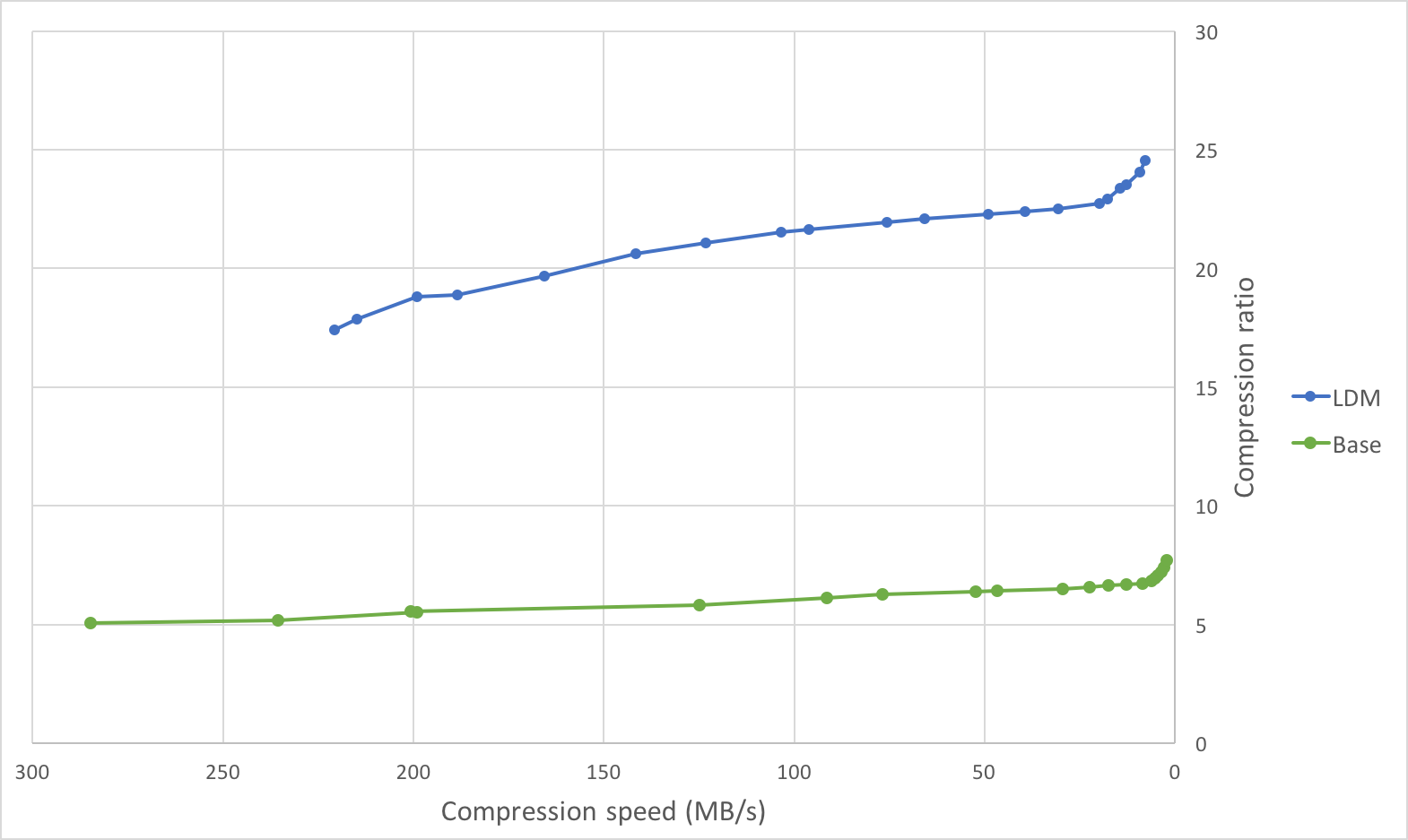 | 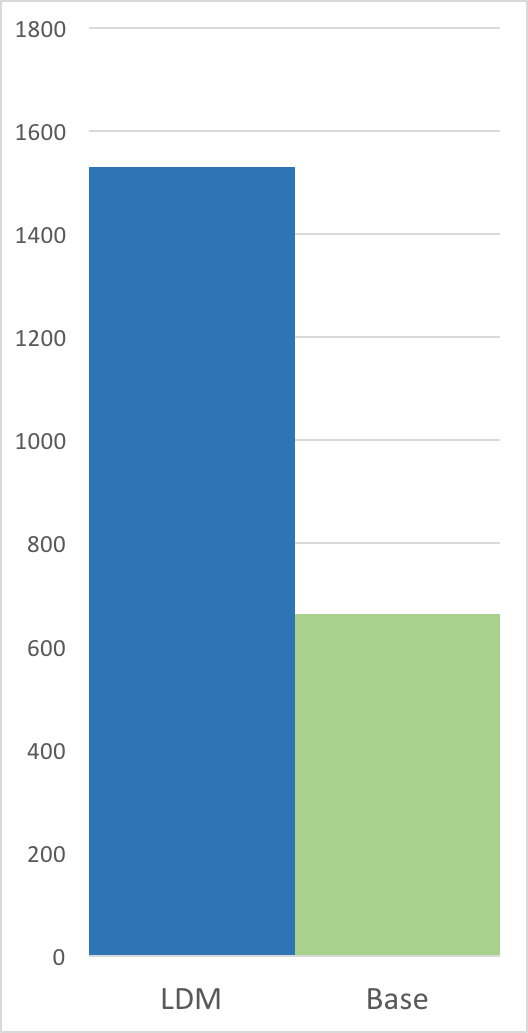 | Method | Compression ratio | Compression speed | Decompression speed | |:-------|------------------:|-------------------------:|---------------------------:| @@ -208,10 +216,24 @@ The below table illustrates this on the [Silesia compression corpus]. [Silesia compression corpus]: http://sun.aei.polsl.pl/~sdeor/index.php?page=silesia | Method | Compression ratio | Compression speed | Decompression speed | -|:-------|------------------:|-------------------------:|---------------------------:| -| `zstd -1` | `2.878` | `231.7 MB/s` | `594.4 MB/s` | -| `zstd -1 --long` | `2.929` | `106.5 MB/s` | `517.9 MB/s` | -| `zstd -5` | `3.274` | `77.1 MB/s` | `464.2 MB/s` | -| `zstd -5 --long` | `3.319` | `51.7 MB/s` | `371.9 MB/s` | -| `zstd -10` | `3.523` | `16.4 MB/s` | `489.2 MB/s` | -| `zstd -10 --long`| `3.566` | `16.2 MB/s` | `415.7 MB/s` | +|:-------|------------------:|------------------:|---------------------:| +| `zstd -1` | `2.878` | `231.7 MB/s` | `594.4 MB/s` | +| `zstd -1 --long` | `2.929` | `106.5 MB/s` | `517.9 MB/s` | +| `zstd -5` | `3.274` | `77.1 MB/s` | `464.2 MB/s` | +| `zstd -5 --long` | `3.319` | `51.7 MB/s` | `371.9 MB/s` | +| `zstd -10` | `3.523` | `16.4 MB/s` | `489.2 MB/s` | +| `zstd -10 --long`| `3.566` | `16.2 MB/s` | `415.7 MB/s` | + + +#### zstdgrep + +`zstdgrep` is a utility which makes it possible to `grep` directly a `.zst` compressed file. +It's used the same way as normal `grep`, for example : +`zstdgrep pattern file.zst` + +`zstdgrep` is _not_ compatible with dictionary compression. + +To search into a file compressed with a dictionary, +it's necessary to decompress it using `zstd` or `zstdcat`, +and then pipe the result to `grep`. For example : +`zstdcat -D dictionary -qc -- file.zst | grep pattern` |